Public Scrutiny and Small-Town Gossip
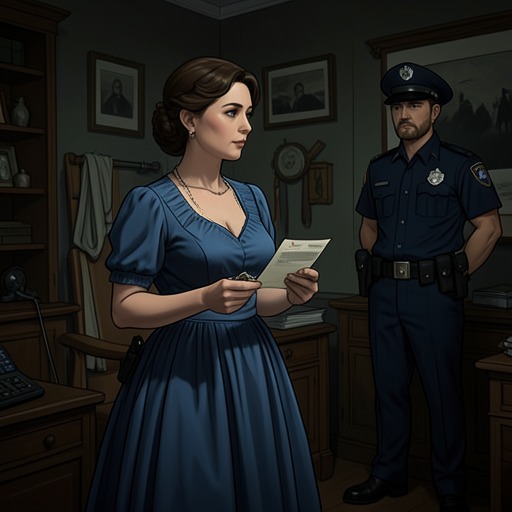
The Birthday PartyPublic Scrutiny and Small-Town Gossip is a force that turns the search for Charlie Hamilton into a contest over who deserves sympathy, who can be trusted, and whose account of events will prevail. In Maple Falls, the Hamilton name brings recognition and standing, but that visibility becomes exposure once Charlie disappears: neighbors watch Kathy and Mitch, reporters camp outside their home, and an unverified suspicion about Kathy’s whereabouts becomes a public challenge to her credibility. The novel contrasts expressions of communal concern with the scrutiny and rumor that make the family feel watched rather than supported.
Reputation and Community Attention
The Hamiltons enter the crisis with an unusually public place in town life. Kathy and her mother, Connie, kept the Hamilton surname after marriage, and the family’s inherited wealth, local investments, and philanthropy have made them respected figures in Maple Falls. Buildings bear the family name, including the library. That established reputation helps explain why Charlie’s disappearance attracts intense attention, but it also means that the family’s private distress quickly becomes public business.
The community’s response arrives first through familiar channels. After the Amber Alert, the Hamiltons’ landline rings through the night with calls from friends and coworkers. Mitch disconnects it, and the family agrees with Chase Cooper to be reachable only by cell phone, where they can screen calls. The measure reflects a need to manage contact at a moment when concern and intrusion are difficult to distinguish. Even a decision to attend church is made under the pressure of public attention: Kathy hopes the service will offer a brief respite, while Fay worries that everyone will stare.
At church, that worry proves justified. People look toward Kathy and Mitch while pretending not to; one congregant tells a friend she is glad the missing child was not her daughter. Kathy answers aloud that nobody can imagine what the family is experiencing. The exchange exposes the gap between spectators’ hypothetical sympathy and the parents’ lived fear. Reverend Stanley prays for Charlie’s safe return, and Mitch takes Kathy’s hand, offering a private gesture of solidarity within a public gathering. Yet Kathy soon feels crowded and exposed enough to leave for air. Concern is present, but so is the burden of being observed while grieving.
Susan Cartwright and the Search for Information
The churchyard encounter with Susan Cartwright brings the local atmosphere of gossip into direct contact with investigative reporting. Susan approaches Kathy as someone who says she attended the party and describes it as unsavory. Her questions about who was there and whether the guests were mostly Scott Bowers’s friends make Kathy suspicious. Susan then identifies herself as an investigative reporter and clarifies that she was not actually at the party: she is repeating what guests told her and wants Kathy’s perspective. The initial ambiguity makes the encounter feel less like straightforward help than another demand for access to the family’s private experience.
Kathy refuses that access. She reaches Mitch’s car, tells Susan to stay away from her family, and insists that the police will find Charlie. Susan leaves her card beneath the windshield wipers and argues that Charlie is not the only girl abducted from Maple Falls: Olivia Jenkins has been missing for eight months. Her warning links the immediate search to an older disappearance, but it also presses Kathy with the possibility that official attention may not be enough. Kathy watches Susan walk away and struggles to steady her breathing, already imagining a life spent running from reporters.
Susan’s stated purpose becomes more legible later, when she meets with Kathy and Megan Carter. She says she works for the Vermont Daily News, investigates secrets in small-town America, and has followed missing-child cases since joining the paper. She also reports having helped find a missing twelve-year-old boy alive. Rather than promising a sensational exclusive, she tells them that information she uncovers will be shared with Chase and presents openness as a way to assist the investigation. Megan remains wary and asks what Susan stands to gain, a question that keeps the distinction between journalistic interest and genuine help unresolved even as Susan offers a practical alliance.
From News Coverage to Public Suspicion
The reporters’ presence outside the Hamilton home turns the family’s address into a visible site of the story. Kathy sees three news vans through closed kitchen blinds and recognizes local television reporter Tammy Arlette. The house itself appears on television. A police cruiser is stationed nearby, ostensibly for the family’s protection, but Kathy wonders whether Chase also suspects her or Mitch. The same public attention that might help generate leads makes the family feel criminalized and watched. Updates from the officer provide some reassurance that Chase is working to find Charlie, while the cruiser and cameras make ordinary movement difficult.
At the police press conference, the public presentation of the parents becomes part of the spectacle. Kathy stands behind Chase, nervous, looking down and clutching a tissue; Mitch faces the journalists with a defiant stare. The questions quickly move beyond the search. One reporter asks where the parents were when Charlie disappeared, and Chase says they were at work. Tammy then challenges that account, saying her sources claim Kathy never arrived at the refuge that day and asking where Kathy really was. Mitch turns sharply toward his wife. Kathy and Mitch leave the camera’s view, and Chase ends the conference by asking for information and insisting that the priority is returning Charlie to her family.
The moment shows how reporting can shift the frame from a missing child to the supposed reliability of her parents. Megan, watching the conference, recognizes that once suspicion attaches to someone it is difficult to dislodge. Chase had chosen not to mention Megan’s planned role in collecting Charlie or her recent attack, fearing that publicity would redirect attention toward Megan and invite blame. But the omission does not prevent scrutiny from finding another target: Kathy’s disputed alibi. The press conference makes an unresolved question look like an indictment before the family can explain itself.
Rumor, Blame, and the Costs of Exposure
After the alibi challenge, Chase warns Kathy and Mitch that reporters will exploit the discrepancy and advises them to avoid interviews and give no comment. He also says he must publicly confirm that Charlie is adopted before acquaintances reveal it in a more damaging way. His concern is not simply privacy: he fears that reporters will portray the family as having tried to conceal Charlie’s adoption. In this environment, a private fact can become a reputational story, and the timing and manner of its disclosure matter as much as the fact itself.
The pressure also lands on Megan. News breaks about her attack despite Kathy’s belief that Chase would not have leaked it. Reporters photograph Megan, and Fay repeats online theories that accuse her of selling Charlie or implicate a supposed boyfriend. Those claims have no established basis in the evidence presented; their importance lies in how quickly uncertainty becomes blame. Fay’s grief and anxiety give the theories emotional force, while Mitch tries to stop them from being treated as facts. Megan’s experience illustrates how the public search can make a person’s vulnerability—her attack, her absence from the party, and the unanswered questions around her—look like evidence against her.
The novel therefore presents public attention as double-edged rather than simply hostile or helpful. An Amber Alert and news coverage can spread information, while the same machinery amplifies hoax sightings, exposes family secrets, and gives unverified claims a life of their own. The contrast between the Hamiltons’ established respectability and the assumptions directed at Megan further shows that public sympathy is unevenly distributed. Susan’s later willingness to share information with Chase offers one possible alternative to sensational competition, but it does not erase the damage caused when a search for a child becomes a public trial of the people closest to her.